Some time ago, Aston Martin introduced the latest version of V12 Zagato Concept, the latest version is a creative idea from the Aston Martin and the Italian coachbuilder, Zagato. The overwhelming popularity of the concept prompted the folks over at Aston to expedite the release of the production car and lo and Behold, we're a few weeks away from seeing the road-ready version of the supercar at the 2011 Frankfurt Motor Show. Official details behind the production version have yet to be released, but We do not expect it to be any different from the concept, including the 6.0-liter V12 engine mated to a six-speed automated manual transmission and the output of 510 horsepower and 420 lb / ft of torque.
What we do know Is that Aston Martin has Revealed the price for the limited-run supercar and it's going to take you back £ 330,000, the which is about 538.300 U.S. dollars based on current exchange rates. Will be only 150 models built so if you're in the market for one, better start saving up and Preparing for a speedy reservation. The production version of the V12 Zagato Will be one of the highlights of Aston Martin's booth at Frankfurt, where it Will be joined by the pair of V12 Zagato race car variants That participated at the 24 Hours of Nurburgring - 'Zig' and 'Zag' - as well as the One-77 supercar and the newly released Vantage Virage and S. Source : Topspeed.com
Project Kahn has never been ashamed in rolling out tuning packages for some of the most powerful cars in the world. Sure, they do a lot of work on Land Rovers - more than we’d like to count, actually - but every so often, they go the Italian route and work on something a little more exotic.
The UK-based tuner’s latest project involves a Ferrari California, one that has been given numerous aesthetic improvements, including a set of 21" matte black forged Monza wheels in the front and 22" versions at the back. On top of that, Project Kahn also dressed up the interior with new accessories, most notable of which are new Dayton seats in black with white piping and stitching, a carbon fiber dashboard, a new carbon steering wheel, and a touched up instrument panel and infotainment system, among other things.
Not one to leave the performance department alone, Project Kahn added a new sports suspension system and a modified version of Ferrari’s own F1-Trac traction control system. Both these improvements were done to give the California better balance, handling, and to improve fuel consumption and emissions, critical elements for a supercar that boasts of a 4.3-liter V8 engine delivering 454 horsepower and 358 lb/ft of torque.
Of course these changes are nothing compared to the package provided by Wheelsandmore. Don’t get us wrong, Project Kahn is a tremendous tuning firm, but the extra 46 HP and 168 lb-ft of torque provided by Wheelsandmore gives their package a little more bang for our buck. Plus, the Ferrari California ’Dreamin’ includes lacquered selected serial parts and a double-line black race stripe, black plasma coated end tips, and discreet carbon elements at the front and rear bumpers. Other additions include side skirts and a carbon boot lid spoiler, among other things.
Little else is known about the new Spider, but its powerplant is expected to remain unchanged, its 4.5 litre V8 engine producing 425kW. The convertible 458 can be expected to benefit from chassis reinforcement to ensure the roof's absence does not rob the car of the track-ready handling Ferrari has engineered into the 458 Italia hardtop.
Cadillac Now with new Concept in 2011, Cadillac tells us that this is not a direct preview of its rumored flagship, but we think it should be. The Ciel—pronounced “CL,” it’s the French word for “sky” and not, according to Cadillac, stolen from some German luxury brand—concept unveiled on the eve of this year’s Pebble Beach weekend has all the presence of any great halo car. The long, low, all-wheel-drive droptop has four doors (rear-hinged in the back), and the open-air cockpit just makes it easier to see the jaw-dropping interior.
The sheetmetal is a striking interpretation of current Germanic styling trends—the sharp fender crease flowing down into the front fascia, headlights stretching back into the fenders—executed within the accepted boundaries of Cadillac’s “Art & Science” design language. It does not adhere too strictly to either of these concepts, though, adding a bit of organic curvature where you might expect planes and angles. The huge, 22-inch wheels hide carbon-ceramic brake rotors, and the wheelbase is a long 125 inches.
Inside, there’s the usual concept-car pizzazz, with holographic instrumentation, touch-sensitive pads on each door handle for each individual passenger’s climate controls, and Snuggies (okay, maybe they’re just blankets) that deploys from the side of each passenger-seat headrest to offer chilled companions a warming swaddle when the driver refuses to raise the roof. Perhaps the coolest touch, though, is the wood trim in the recessed portions of the front seatbacks. Full sheets stretch from waist level to shoulder height, and look magnificent. They also look tremendously improbable for a production car.
The whole concept, in fact, seems improbable, but that’s because it is. Never mind the Ciel’s twin-turbocharged 3.6-liter V-6, hybrid system, and lithium-ion batteries. (Estimated output: 425 hp and 430 lb-ft of torque.) Cadillac spokespeople told us outright that this car is not a precursor to the yet-to-be-decided-upon flagship. However, a Ciel with a fixed roof—and, sadly, probably without the suicide rear doors—would make for a far-more-feasible and only slightly less entrancing ambassador for the brand than this version. That the critical dimensions very closely mirror those of the Mercedes-Benz S-class shows where the company is looking. And once the standard version of such a vehicle was launched, maybe Cadillac could then start thinking about a convertible. Source : Caranddriver.com
The futureis verypromisingindeedwith aferraricarlaunchedby adopting theadvantagesofpreviousversionsferrari.The car, codenamed F152, will make its world debut at the 2012 Geneva Motor Show, but our spy photographers were able to grab a few snapshots of the vehicle while it underwent some testing.
The test mule is being hidden under a599 GTO body, while Ferrari tests the chassis and powertrain of the 599 GTB’s successor. The F152 will be powered by a modified version of the great 6.3 liter V12 with direct injection and will probably only be combined with rear-wheel-drive. Power is expected to climb close to 700 HP, if not more, and will connect to the rear wheels via the new seven-speed dual-clutch gearbox.
When the body does get put into place, the F152 will make intense use of aluminum and carbon fiber making it a true sports car.
Chevrolet Caprice Police Patrol VehicleAn all-new Chevrolet Caprice Police Patrol Vehicle (PPV) will join the ranks of law enforcement departments across North America in 2011. It's a modern, full-size, rear-drive sedan that will offer both V-8 and V-6 engines, as well as a host of specialized equipment and features.
Chevrolet made the announcement at the annual International Association of Chiefs of Police convention, in Denver, Colorado. The Chevrolet Caprice PPV will be available for ordering next year and will hit the streets in early 2011.
"The new Chevrolet Caprice police car is the right tool at the right time for law enforcement," said Jim Campbell, general manager for GM Fleet and Commercial Operations. "We asked for a lot of feedback from our police customers, which helped us develop a vehicle that is superior to the Crown Victoria in key areas." Vice President, Global Chevrolet Brand Brent Dewar added, "Along with Impala and Tahoe, the Caprice Police Patrol Vehicle gives agencies a greater range of choices for police and special service vehicles that are all available from Chevrolet." Unlike other police cars on the market, the Chevrolet Caprice PPV is not based on existing "civilian" passenger-car model sold in North America. It has been developed in key areas specifically for police duty, containing modern equipment and features:
Powerful 6.0L V-8 with fuel-saving Active Fuel Management technology and E85 capability delivers expected best-in-class 0-60 acceleration (sub six seconds) and top speed; a V-6 engine will also be offered, beginning in the 2012 model year Optional front-seat-only side curtain air bags allows a full-width rear-seat barrier for greater officer safety Two trunk-mounted batteries, with one of them dedicated to powering various police equipment Designed for five-passenger seating, meaning the upper-center section of the dashboard can be used for equipment mounting without the concern of air bag deployment interference Compatibility with in-dash touch-screen computer technology Special front seats designed for the long-term comfort of officers whose car is their effective office, including space that accommodates the bulk of a typical equipment belt
The front seats are sculpted to "pocket" the equipment belt, which greatly increases the comfort for a great range of police officer sizes. The foam density of the seatback and cushion insert surfaces are designed to conform to the shape of an equipment belt's various items, too, allowing the officer's back to rest properly on the seatback surface. "The Chevrolet Caprice Police Patrol Vehicle's seats represent a revolution in comfort and utility for officers who spend long hours in their car," said Bob Demick, lead seat design manager. "The shape also enhances entry and egress, making it easier for officers to exit the vehicle quickly. The seatback bolsters, for example, have been purposefully contoured to help pocket the equipment on the belt, which includes the gun, Taser and handcuffs, which rest comfortably in the sculpted lower bolsters. That also increases the longevity of the trim cover surface." Along with comfort, the materials used in the seats were also carefully selected. High-wear materials were chosen to stand up to long hours of everyday use, while breathability, long-term durability and ease of cleaning were also important criteria. Engineers worked on several iterations of the seat, testing a couple of versions in the field to get real-world feedback from police officers, who used prototype seats in their cruisers for a month. Their input helped determine the final design. Class-leading space The Chevrolet Caprice PPV is based on GM's global rear-drive family of vehicles that also underpins the Chevy Camaro. It uses the longest wheelbase of the architecture - 118.5 inches (3,010 mm) - along with a four-wheel independent suspension that delivers responsive high-performance driving characteristics that are crucial in some police scenarios. Chevrolet Caprice Police Patrol Vehicle's long wheelbase also contributes to exceptional spaciousness. Compared to the primary competition, its advantages include:
A larger interior volume - 112 cubic feet / 3,172 liters - than the Ford Crown Victoria, including nearly 4 inches (101 mm) more rear legroom The barrier between the front seat and rear seat is positioned farther rearward, allowing for full front-seat travel and greater recline for officer comfort At 18 cubic feet (535 liters) free space (beyond battery located in trunk), the Caprice's trunk volume is large enough to accommodate a full-size spare tire under a flat load surface in the trunk storage area. The Chevrolet Caprice's 6.0-liter V-8 is rated at an estimated 355 horsepower (265 kW) with an estimated 384 lb-ft of torque. It is backed by a six-speed automatic transmission that is performance-calibrated for police duty. Additional, police car-specific powertrain and vehicle system features include:
High-output alternator
Engine oil, transmission and power steering coolers
Standard 18-inch steel wheels with bolt-on center caps
Large, four-wheel disc brakes with heavy-duty brake pads
Heavy-duty suspension components
Police-calibrated stability control system
Driver information center in the instrument cluster with selectable speed tracking feature. A host of complementary features are also offered, including special equipment packages such as spotlights; lockouts for the power windows and locks; and an "undercover" street-appearance package (9C3). To enable more room for interior equipment, the standard radio can be relocated to the trunk, allowing for an in-dash, touch-screen computer to be used.
While most of us can only dream of owning the fastest car in the world, some will do whatever it takes to possess the most powerful speed. So, how fast are the fastest cars in the world? Here are the 10 fastest cars available on the market (production models, as opposed to concept cars) measured by tested top speed (theoretical speeds do not count).
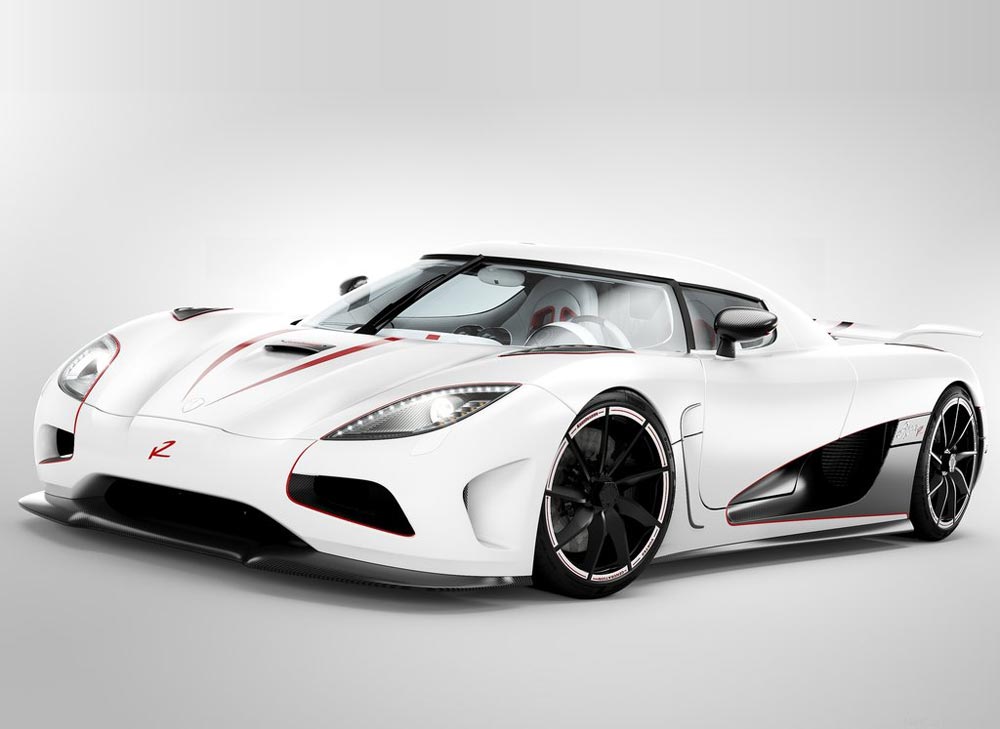
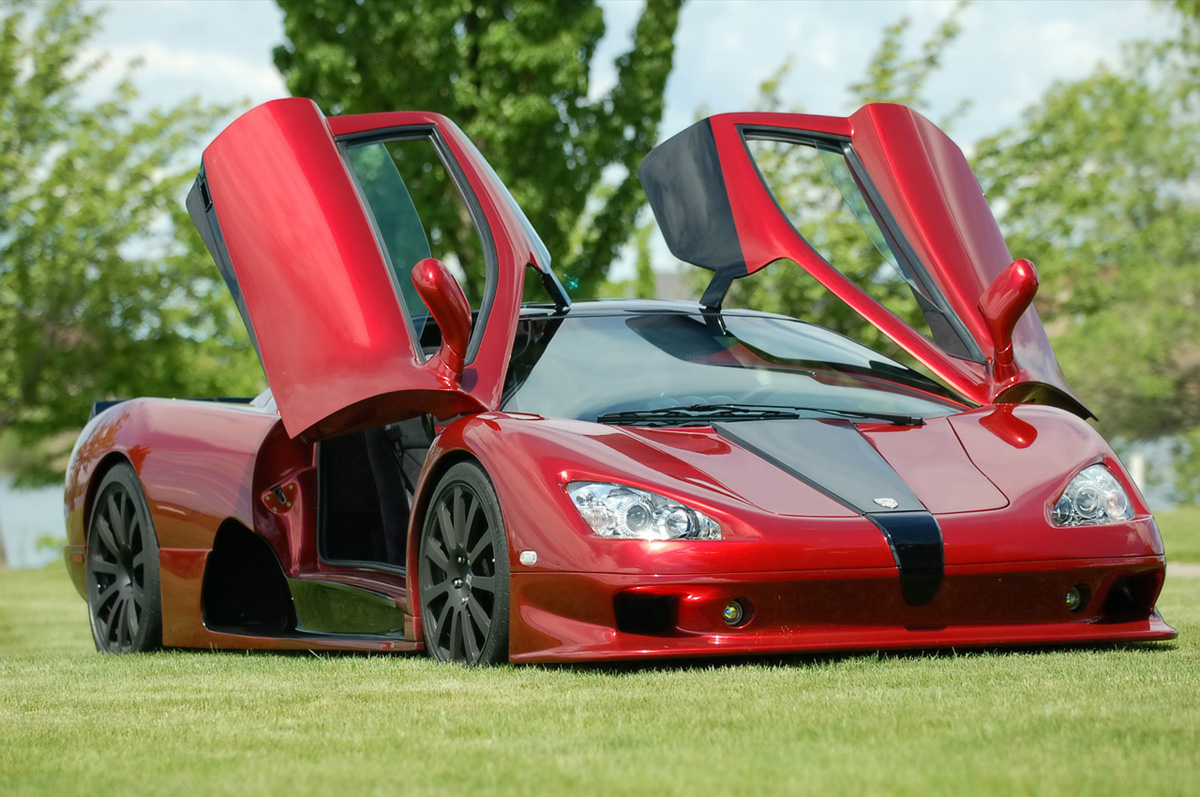
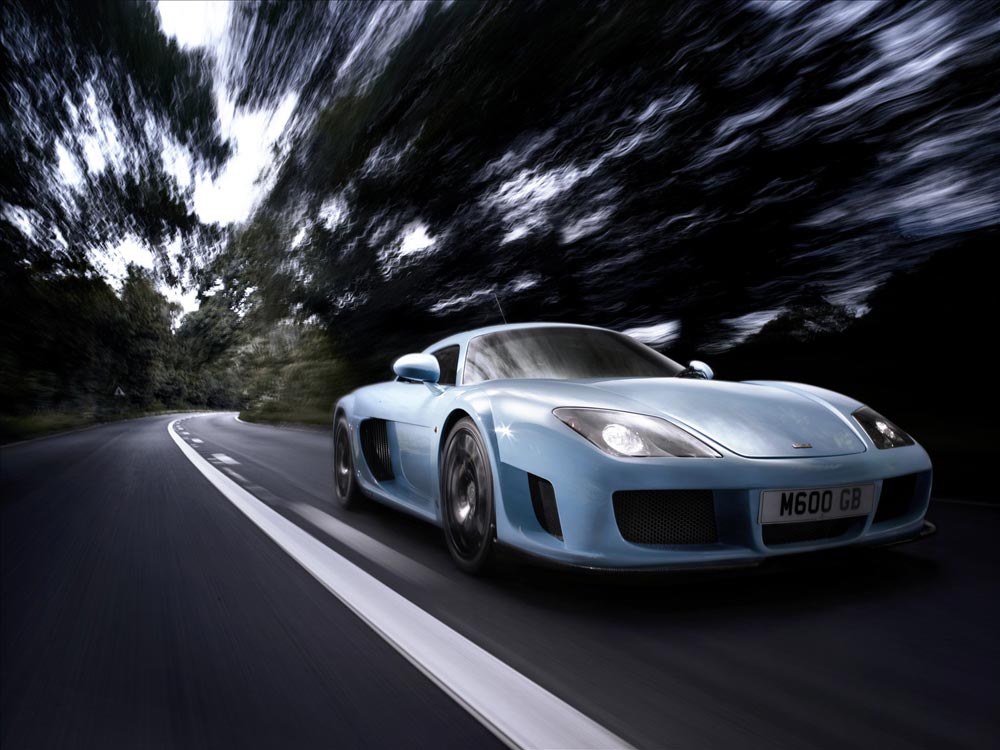
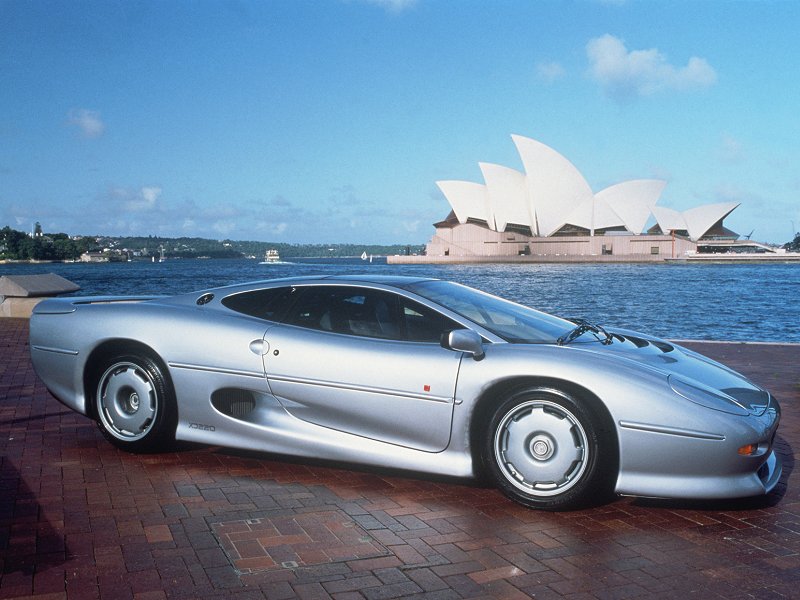
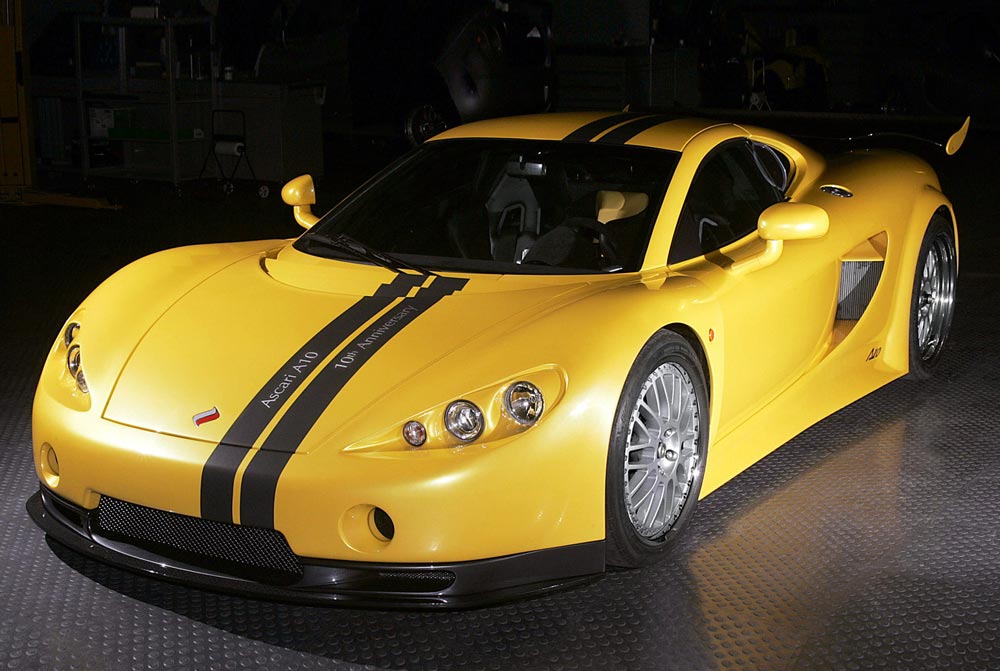
1. Bugatti Veyron: 267 mph, 0-60 in 2.5 secs. Aluminum, Narrow Angle 8 Liter W16 Engine with 1200 hp, base price is $1,700,000. The Super Sport version is $2,400,000. The speed was tested again on July 10, 2010 with the new 2010 Super Sport Version: the Bugatti Veyron once again claims the title of the fastest car in the world at 267 mph. 2. Koenigsegg Agera R: 260 mph, 0-60 in 2.8 secs. 5.0-liter V8 Engine with twin turbo’s, housing 1099 hp. Base price is $1,600,000. If you're into snow sports, the Agera R can be fitted with a Ski Box as well as winter tires, not that I would take one on a ski trip or anything like that. While the Agera R has a massive theoretical top speed, the current tested top speed is 260 mph. Expect this snow car to be the Bugatti's arch enemy for the next 5 years. 3. SSC Ultimate Aero: 257 mph, 0-60 in 2.7 secs. Twin-Turbo V8 Engine with 1183 hp, base price is $654,400. Tested in March 2007 by Guinness World Records, The SSC Ultimate Aero was the fastest car in the world from March 2007 to July 2010. On March 2011, the Koenigsegg Agera R also surpassed it, forcing this American made car to the #3 spot. 4. Saleen S7 Twin-Turbo: 248 mph, 0-60 in 3.2 secs. Twin Turbo All Aluminum V8 Engine with 750 hp, base price is $555,000. Smooth and bad-ass. It will make you want to show it off non-stop. 5. Koenigsegg CCX: 245 mph, 0-60 in 3.2 secs. 90 Degree V8 Engine 806 hp, base price is $545,568. Made in Sweden, it is the older brother of the Agera R, only losing to 4 other supercars in the world. 6. McLaren F1: 240 mph, 0-60 in 3.2 secs. BMW S70/2 60 Degree V12 Engine with 627 hp, base price is $970,000. The fastest car in the 20th century with doors that looks like bat wings. Maybe Batman needs to order one and paint it black 7. Gumpert Apollo: 224 mph, 0-60 in 3.0 secs, 4.2 liter V8 Engine that houses 650 hp. Base price: $450,000. Gumpert claims that the Apollo was designed such that it could drive upside-down in a tunnel with speeds at 190 mph or above. Of course, no one has tested this yet. 8. Noble M600: 223 mph, 0-60 in 3.7 secs. Twin-turbocharged 4.4-liter V8 Engine with 650 hp. Base price is $330,000. The Noble M600 also happens to be a very cool car. Its inconspicuous design sports a slender and contoured body which does not scream out for attention at every second of the day. We have a tie for 9th and 10th places: 9. Pagani Zonda Cinque Roadster: 217 mph, 0-60 in 3.4 secs. Twin turbocharged AMG V12 engine that produces 678 hp. Base price is $1,850,000. The Pagani Zonda Cinque Roadster is a limited-edition, with five ever produced. It is the quintessential exotic and exclusive supercar. 9. Ferrari Enzo: 217 mph, 0-60 in 3.4 secs. F140 Aluminum V12 Engine with 660 hp, base price is $670,000. Only 399 were ever produced; the price goes up every time someone crashes. 9. Jaguar XJ220: 217 mph, 0-60 in 3.8 secs. Twin Turbo V6 Engine with 542 hp, base price was $650,000. Made in 1992, this car still has what it takes to make the list. 10. Ascari A10: 215 mph, 0-60 in 2.8 secs. 5.0 litre BMW V8 S62 Engine with 625 hp. Base price: $650,000. The company planned to produce 50 of these supercars at its factory in Banbury, England. 10. Pagani Zonda F:215 mph, 0-60 in 3.5 secs. Mercedes Benz M180 V12 Engine with 650 hp, base price is $667,321. With a V12 motor, this baby can do much better.
It’s been nearly two years since BMW’s Vision EfficientDynamics concept debuted at the 2009 Frankfurt show, and the car has now officially re-emerged one step closer to production as the BMW i8 concept. As you can see, little has changed in the styling department. In fact, other than a new wheel design, the only other notable change we’ve spotted concerns the doors, which seem to have claimed some territory along their bottoms and thereby reduced the size of the blue body-side accent. Interestingly, the car didn’t show that change when BMW paraded it around for spy photographers this past March, but we like it. Passenger Compartment + Powertrain = LifeDrive As with the i3 city car concept that debuted at the same time (you can read about it in full here), the story of the i8 begins with its LifeDrive architecture. BMW says that its experiences in creating the Mini E and 1-series-based BMW ActiveE showed that adapting cars engineered for internal-combustion power to electric propulsion results in a lot of excess weight and compromises in packaging. As a result, both the i8 and i3 are built using two purpose-built modules: one to house passengers, dubbed “Life,” and one for propulsion and suspension components, called “Drive.” Combine them, and you have a car—and marketing-friendly “LifeDrive” branding. While the i3 and i8 share the LifeDrive architectural philosophy, the cars differ in execution. That’s because the i3 is fully electric, while this i8 is a plug-in hybrid, so its Drive component is actually split in two, with an electric motor at the front axle and a gas engine at the rear. Unlike the i3, which situates its batteries below the passenger compartment, the i8’s lithium-ion cells are actually part of the Life module, stacked through a central tunnel that might house a transmission and driveshaft in a conventional car. Arranging them this way allowed BMW’s engineers to achieve yet another claim of perfect 50/50 weight distribution, thereby preserving peace in the city of Munich. As in the i3, the i8’s Drive components are largely crafted of aluminum, while the life module uses a carbon-fiber-reinforced plastic monocoque. Using so much lightweight material essentially cancels out the added weight of the heavy electric drive components, thereby allowing the car to weigh less than 3300 pounds, according to BMW. The rigidity imparted by the carbon fiber also allows for long, dramatic doors that ease access to the two small rear seats, and is a boon to crashworthiness, too.
While most other so-called “through-the-road” hybrids (meaning the propulsion systems each drive their own axle) are based on existing front-drive vehicles—meaning they add electric power to the rear wheels—BMW had the luxury of starting from scratch. Because most braking energy gathers at the front of the vehicle, the i8 has its electric motor up front for the sake of recapturing energy. The motor is shared with the i3, and its peak output is 170 hp and 184 lb-ft or torque. It’s fed juice, of course, by those lithium-ions, which take about two hours to charge and return 20 miles of all-electric driving. Three’s Company: 220-Horse Three-Cylinder The original Vision EfficientDynamics concept used a three-cylinder turbo-diesel engine, but the i8 makes use of BMW’s new gas-fired 1.5-liter turbo three-cylinder, which we first reported on in April. It makes 220 hp and 221 lb-ft of torque, helping the i8 to its governed top speed of 155 mph. The run to 60 mph will come in under five seconds, says BMW, who also claims the i8 will return 78 mpg on the European cycle. But that test is notoriously optimistic, and the company says normal driving will realistically result in economy of just half that figure. The engine and electric motor can power the car on their own or in tandem for better traction, with the stability-control system’s whims playing a large part in deciding when to team them up. Each axle also contributes regenerative electricity; the front houses the regenerative braking system, while the engine at the rear has a high-voltage alternator that can recapture energy. No mention was made regarding what type of transmission is installed in the i8. A button-activated “Eco Pro” mode dulls throttle response, caps speed between 56 and 74 mph, and reduces the load of the climate-control system. (Because the climate-control system also is responsible for keeping the batteries at an operating temperature of 68 degrees, it always runs to some extent, however.) The i8 also features an intelligent navigation system that can decide the most energy-efficient route to a destination.
What i Looks Like While not much has changed about the i8’s styling, a few themes have emerged now that it has a sibling in the i3. The laying of white panels over a black and clear sub-layer is meant to reference the car’s Life and Drive components. Besides just looking flat-out futuristic, BMW i models will be marked by a BMW roundel with a blue ring around the outside, blue accents on the grilles and side sills, and the “stream flow” C-pillar treatment. Inside, the i8 concept foregoes traditional gauges in exchange for a more future-tech 8.8-inch display screen for reporting road and engine speed, as well as battery and fuel levels. In Eco Pro mode, the digital gauges glow blue; in Sport mode—details of which were in short supply—they glow orange. A second screen tops the dash above the center stack to display navigation and infotainment functions, and the rest of the interior is clean and simple.
Yes, the i8 is technically a concept, although in typical BMW fashion, it’s pretty well fleshed out and likely very close to what you’ll see when the production car launches in 2014. While the diminutive i3 is certainly intended to capture the attention of the general public, the i8 appears to be an effort to keep enthusiasts under the BMW umbrella as sustainability and efficiency become increasingly important. While it remains to be seen if the i8 will be satisfying to pilot, we applaud the idea, since there’s not much that we want to see more than a long future for driver’s cars.Source : Caranddriver.com
Three things come to mind when you think of the brand Ferrari: red, fast and expensive. Maybe, even Italian. Ferrari wrapped up its 2011 World Design Contest that pitted designs students from over 50 schools from around the world to design a "hypercar whose design reflects social changes and technical innovation without sacrificing the brand's performance and iconic appearance." Three South Korean design students took first place with their Ferrari Eternity concept car — the future of Ferrari. Excuse us, while we wipe the drool off our chins.
Design students Kim Cheong Ju, Ahn Dre and Lee Sahngseok from Hongik University smoked competitors from Turin and London with their hybrid electric sports car. The Eternity's body is made entirely out of carbon fiber to keep it light and coated in lithium to give power to the car's engine. It runs off a hydrogen fueled engine with a "Fly-Wheel Energy Storage" that cranks miles on electric as a backup. "Maglev System Wheels" were also included to reduce friction and ensure the Eternity drives smoothly. While the Eternity's design embodies everything Ferrari's are famous for, I personally would have picked third-place winner Henry Cloke and Qi Haitao's Cavallo Bianco car, a hunk of sleek silver with concealed wheels that looks all sci-fi-ish. Source : dvice.com
The latest in a very short but highly distinguished—and completely nuts—line of Black Series Benzes is here. The C63 AMG Black Series is based on the C63 coupe, which we just drove for the first time a few months ago. Following the lead of the not-for-U.S.-sale SLK55 Black Series, the CLK63 Black Series, and the SL65 Black Series, this C63 AMG is amped up visually and dynamically, with a steroidal bump in output to back up the flared nostrils. In case the 451 hp and 443 lb-ft in the standard-issue C63 AMG or the 481 and 443 offered by that car’s AMG Development Package aren’t quite cutting it, the C63 AMG BS makes 510 hp at 6800 rpm and 457 lb-ft at 5200. Like cars with the Development Pack, the Black Series borrows its pistons, connecting rods, and crankshaft from the be-gullwinged SLS AMG supercar. Behind the motor lives the same seven-speed automatic found in the regular C63, packing four shift modes and a launch-control function for when you really don’t want to linger at this stupid party one more split second. We ran a Development Pack sedan to 60 mph in just 3.9 seconds; with wider rear rubber, figure on the Black Series shaving a couple tenths from that and clearing the quarter-mile in around 12 seconds flat.
I’m Going to Eat You Like the Black Series cars that came before it, the C63 oozes menace and purpose. Air can’t flow through stuff, so there’s remarkably little material remaining in the front fascia, the bumper that once resided there largely displaced by intakes covered by black mesh. A gaping central intake is flanked by two smaller holes through which cooling air enters, and two nostrils atop the hood give hot air a convenient exit from underhood. As if to emphasize its name and purpose, the front splitter comes to a sharp point in the middle of the nose. Flared fenders widen the car by 2.2 inches up front and 3.3 out back, covering tracks stretched by 1.6 and 3.1 inches, respectively. Vents behind the front wheels and ahead of the rears are both nonfunctional, which somewhat diminishes their awesomeness. The lightweight wheels at each corner have their movements controlled by adjustable coil-overs, while speed-sensitive steering issues directional orders and Black Series–specific anti-roll bars maintain the contact patches during aggressive driving. The brake rotors measure 15.4 inches in diameter up front and 14.2 inches out back. Red paint is standard on the calipers, which have six pistons up front and four in the rear. The rubber measures 255/35-19 up front and 285/30-19 out back—that’s up from 235/40-18s and 255/35-18s on the basic C63 AMG coupe—and a limited-slip diff is standard, as is a stability-control system that will get entirely out of the way if you want it to.
Flat Bottom Girls You’ll notice hard-shell sport buckets in the accompanying photos, but those aren’t likely to make it to the U.S. We are likely, however, to at least get red stitching on whatever seats we do end up with. Calm down. The rear seat has been dismissed in the interest of weight savings, but can be reactivated if you’d like to frighten more than just one person at a time. And AMG has flattened both the bottom and top of the steering wheel, which makes it way more serious than all those wheels with just flat bottoms. Lest the screaming V-8 deafen your passenger to the point they can no longer hear the V-8 screaming, a Black Series logo on the dash will remind them why they can’t hear. Those who feel the flared and vented look of the C63 AMG Black Series isn’t quite enough will be able to crank up the appearance even more with an AMG Aerodynamics package that includes carbon-fiber winglets on the front valance and a fixed carbon-fiber spoiler with an adjustable aerofoil. AMG says these bits are functional and increase downforce, but isn’t saying by how much. It also won’t provide photos of a car so equipped, so we don’t know by how much they make it look more menacing and/or ridiculous. The C63 Black’s other major option package is a Track pack that includes even higher-performance rubber of unspecified Dunlop pedigree, as well as a differential cooler. All Black Series cars to this point have been low-production affairs, the SLK55 AMG, for example, being limited to just 120 units. The CLK63 and SL65 sold in slightly higher numbers, at 700 and 350, respectively. While Mercedes isn’t saying yet how many C63 AMG Black Series it will build, representatives do tell us the number will be capped. Figure on a sticker edging close to $100,000. While that’s awfully steep for a car that shares its basic shape and structure with a coupe starting in the mid-$30,000 range, it is about $40,000 cheaper than the CLK63 Black Series and a whopping $200K less than the SL65 Black Series. So if you’ve got a spot reserved in your garage for what will certainly be the cheapest U.S.-market Black Series car yet, get on the horn to your dealer now. U.S. distribution will begin early in 2012.
Highs: Good power, great visibility, newly richened interior. Lows: Chassis pitches and bobs over uneven surfaces, styling doesn’t advance the game.
Specifications
VEHICLE TYPE: front-engine, rear-wheel-drive, 4-passenger, 4-door sedan
PRICE AS TESTED: $83,095 (base price: $72,175)
ENGINE TYPE: twin-turbocharged and intercooled DOHC 32-valve V-8, aluminum block and heads, direct fuel injection
Displacement: 285 cu in, 4663 cc Power (SAE net): 402 hp @ 5000 rpm Torque (SAE net): 443 lb-ft @ 1600 rpm
TRANSMISSION: 7-speed automatic with manual shifting mode
DIMENSIONS: Wheelbase: 113.2 in Length: 194.5 in Width: 74.1 in Height: 55.8 in Curb weight: 4158 lb
C/D TEST RESULTS: Zero to 60 mph: 4.2 sec Zero to 100 mph: 10.2 sec Zero to 130 mph: 17.6 sec Street start, 5–60 mph: 4.7 sec Top gear, 30–50 mph: 2.3 sec Top gear, 50–70 mph: 2.8 sec Standing ¼-mile: 12.8 sec @ 112 mph Top speed (governor limited): 134 mph Braking, 70–0 mph: 163 ft Roadholding, 300-ft-dia skidpad: 0.89 g
It's an age-old automotive-design problem—how do you fix what isn't broken? How do you update a timeless shape? There are two possible answers: One, you tweak it a little, à la Mini Cooper, until your shape is neither new nor old. Or two, you start over, Jaguar XJ–style, throwing everything out the window and starting fresh. Best case, you end up with something revolutionary. Worst case, you get a hacked-up rehash that just reminds you of what you've lost. Bigger and More Muscular Well, there is a third possibility: somewhere in between, and that’s what we have here. When it was launched in the United States in 2005, the Mercedes-Benz CLS turned heads; the "four-door coupe" oxymoron suddenly made some sense. Even though the car was little more than a rebodied E-class, 40,000 examples whizzed out of American dealers in five years. Now we have a new CLS for 2012. Meet the new oxymoron, not quite the old. You will note that it looks different. Kind of. Also note that it’s still fundamentally an E-class. Wheelbase is up, from 112.4 inches to 113.2, and overall length has jumped by nearly an inch. Height and width increase too, as do the front and rear tracks. The biggest difference is the lack of a naturally aspirated powerplant. In place of the old car's 5.5-liter V-8, the CLS550 now sports a 4.7-liter, direct-injection, twin-turbo V-8, the same engine used in the humongous 2011 CL550 4MATIC coupe and proliferating throughout the Merc lineup in the coming years.
Power is down from the CL—402 versus 429—as is torque, from 516 lb-ft to 443. This is still 20 hp and 52 lb-ft more than the last-gen CLS550 offered, and the 4.7-liter goes like the clappers: Hitting 60 mph requires just 4.2 seconds and the quarter passes in 12.8 at 112 mph. Even so, we can’t help missing the CL's extra bit of shove. (Disclaimer: The CL550 thumps its way across the landscape with the kind of seamless urge usually found in booster rockets. We miss its shove in everything.) A smooth-shifting seven-speed automatic is the only transmission available in the CLS550. If you're absolutely desperate for more grunt, a 518- or 550-hp, 5.5-liter twin-turbo V-8 can be found in the CLS63 AMG. And no, we don't understand the naming scheme, either. Capable but Cautious This is a big car—it tipped our scales at more than 4100 pounds—and it drives like one. The plushly appointed cabin is comfortable, the heavily bolstered seats seemingly good for thousand-mile days. But the low roofline lends a small-car feel, and you end up tossing the CLS around like you would a much smaller machine.
Chassis behavior is predictable and entertaining but won't surprise anyone. The standard Airmatic air suspension works well enough on winding pavement but doesn’t like being rushed; you spend a lot of time waiting for the nose to take a set, for the back end to settle down, for the rest of the car to make it through the corner. Grip on a smooth skidpad is a commendable 0.89 g, but truly crazed asphalt can bind things up to the point where the car simply gives up and throws in a stability-controlled brake application to yank everything back down again. The brakes are simply unflappable, with short pedal travel and surprising fade resistance in hard street driving, and they turned in an impressive 163-foot stop from 70 mph. The electric power steering is accurate and possessed of classic Mercedes heft. All in all, it’s a nice, quick package, if not an overly sporty or aggressive one.
Okay, so the styling occasionally seems forced, with too many angry-face fillips and none of the previous CLS’s elegance. But the 2012 CLS550 is still more stylish than the E-class sedan, and if you’re not enamored of the new sheetmetal, consider this: From the driver’s seat, all you see is the road. source : Caranddriver.com